Bernie Townsend Tripblog 1

Punta Arenas Sunrise
Bernie Townsend Trip Blog #1
Location 1: Lago Grey/ Grey Glacier (CLIM)
On our field expedition to Lago Grey, we were fortunate enough to go on a boat tour of the lake. This tour provided a unique perspective of the landscape, as well as a close view of the glacier. We witnessed the various geological features caused by the glacier. Figure 1 shows an outwash plain that we walked on in order to reach the boat. The sediment was mostly small, well-sorted, and rounded. The sediment was transported by meltwater from the glacier, explaining the small and rounded sediment size. Larger clasts can be found on the moraines as they were deposited by the glacier itself.
Figure 2 shows Grey Glacier. The bright blue color is a result of light scattering and selective absorption, meaning that when sunlight hits the glacier, all other colors except blue are absorbed. We were also able to witness the calving of the glacier. I heard a loud noise followed by a small piece of ice falling into the lake. Calving is caused by the constant stress due to the movement of the glacier.
Figure 3 shows an intrusion in the rock layer. To be specific, this type of vertical intrusion is a dike. The dike was formed by the magma upwelling, cooling, and solidifying in the rock. Throughout the boat tour, we witnessed many other intrusions, including sills and lagoliths. We also saw a variety of folds in the rock layer, caused by the movement of tectonic plates and pressure.
Figure 4 shows a pinnacle iceberg. It also shows the grey water of the lake. This coloration is caused by the suspension of fine sediments in the water. This makes life impossible within the lake. We did witness a few varieties of birds around the lake, but no aquatic species. The iceberg was separated from the glacier through calving. The water, as well as wind, eroded the iceberg into its current wave-like shape. Typically, icebergs only show about 10% of their size above the surface of the water. When icebergs have more mass above than below the water, they are prone to flip. After hearing this information on the boat, I was slightly nervous, as I was informed that the flipping of icebergs can sink boats. Fortunately, the iceberg did not flip, and we could witness its beautifully unique shape.

Lago Grey Outwash Plain (Figure 1)

Glacier Grey (Figure 2)

Intrusions (Figure 3)

Pinnacle Iceberg (Figure 4)
Location 2: Punta Arenas Urban Wetlands - Humedal Tres Puentes (CONS)
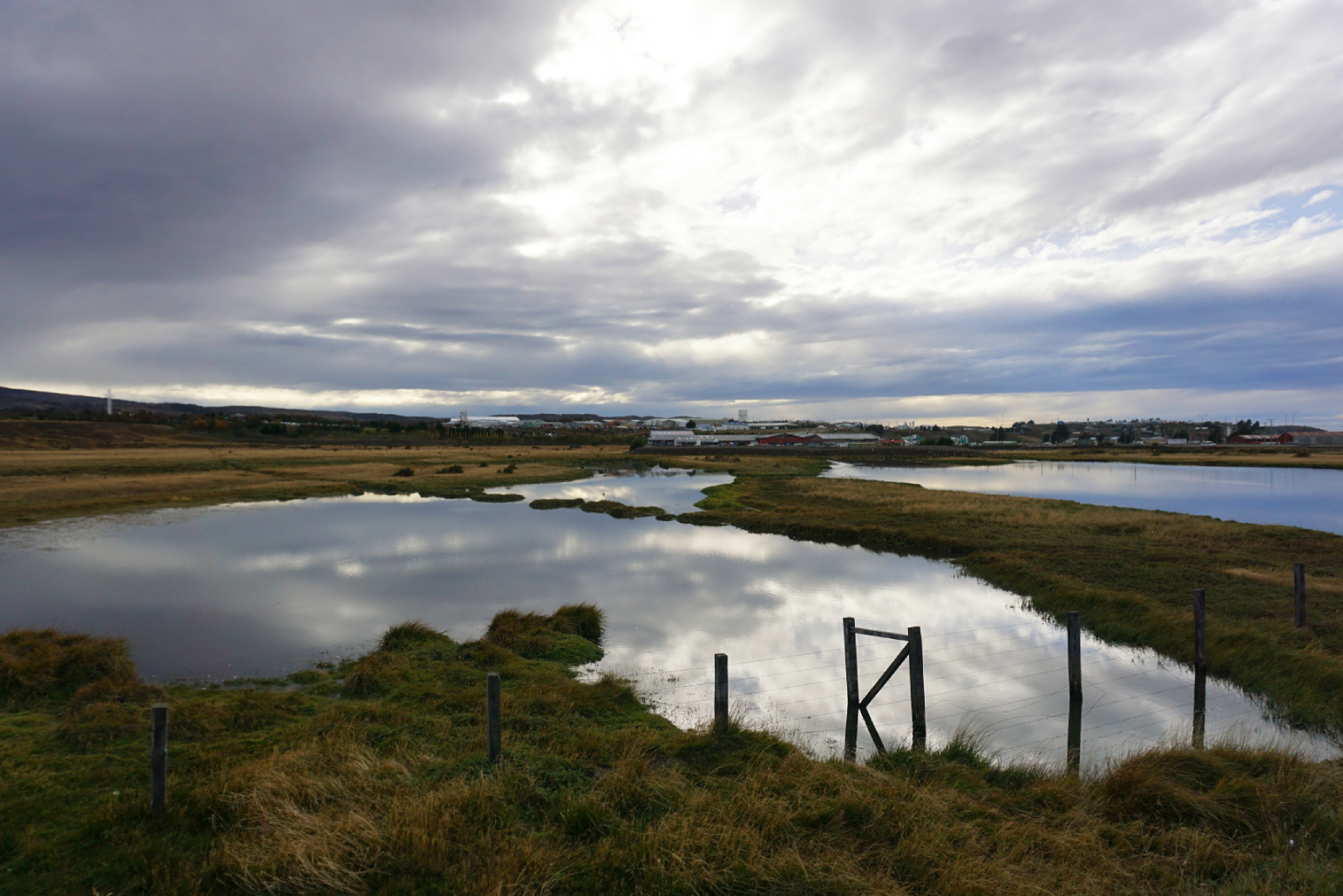
At the various urban wetlands in Punta Arenas, there were a variety of threats to the ecosystems. Stray dogs and cats often eat the birds and disrupt their habitat. Being chased by predators also disrupts breeding and resting for these species. Furthermore, litter in the city, combined with very high winds causes lots of trash to enter the ecosystem. One of the main threats to one of the wetlands was the Coca-Cola plant located just meters away from the water system. Runoff can lead to eutrophication, making it challenging for life to thrive.
Figure 1 depicts a map of one of the wetland systems. As seen in the map, there is a major road that runs through the middle of the wetland. This is detrimental to the wetland as it causes an increase in noise pollution, interrupting mating patterns.
Despite the many threats to wetlands, there have been major steps to protect wetlands in Chile within the last 5 years. A green tax has been incorporated to incentivize companies to use green policies. In 2020, Law 21300 was passed to protect urban wetlands. This is the law that began the official protection of these wetlands. There are now 30 urban wetlands in Punta Arenas, boasting 138 different species, including upland geese, spectacle ducks, steamer ducks, sparrows, and snipes. The wetlands also provide value to the people of Punta Arenas through education. School children have begun learning about these areas and are even helping the conservation efforts by creating signs. The area is also important because it is a cherished spot for ice skating. This recent effort to protect the land makes me feel very optimistic about these spaces in the future.
Map of the Wetland (Figure 1)

The Wetland (Figure 2)
Location 3: Serrano Glacier (ECO)
Although they cannot be seen in normal images, glaciers often harbor very unique species within them. Serrano Glacier, for example, has many species that can only able to be found in glaciers. These species include glacial algae, bacteria, archaea, fungi, rotifers, tardigrades, annelids, insects, and crustaceans. It is very important that these glacial conditions be protected, as if they are lost, the species will also be lost, decreasing biodiversity.
Outside of the glacier, a variety of plant species were found, including Lenga, ñirre, Calafate, Winter's bark, and Chaura (Figure 2). Many of these plants also thrive in the conditions created by the glacier due to various adaptations, such as tolerance to thin soils and evergreen leaves. If the glacier is lost and the habitat changes, these species could be at risk. Even bird species, such as Grey-crowned rosy finches, depend on species living in the ice to survive. Though the glacier may seem like it does not support life, many species depend on it. Glaciers are not just an indicator of climate change, but a very important habitat to protect.

Serrano Glacier (Figure 1)

Chaura plant located next to the trail leading to Serrano Glacier (Figure 2)

Comments
Post a Comment